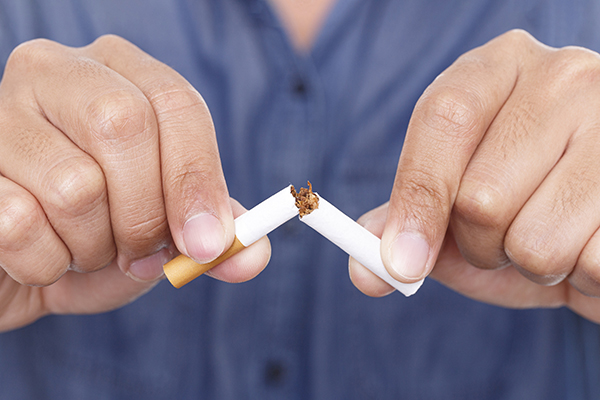
So you’ve committed to a healthier lifestyle. By all means, then, eat more fruits and vegetables and move your body often. And above all, give a hard “no” to radioactive elements.
These particles are among the thousands found in tobacco, of which at least 70 are known to cause urinary cancers of the bladder and kidneys. The other chemicals include nicotine, lead, formaldehyde, ammonia, and arsenic.
But in addition to cancer, did you know the harmful chemicals in tobacco also can contribute to kidney stones, incontinence, infertility, erectile dysfunction, and painful bladder syndrome (interstitial cystitis)?
That’s a lot of damage packed into a five-inch habit. But considering how your body works, it’s not surprising.
Clearing the Smoke: How Tobacco Runs Through Your Body
Your organs serve as processors. When chemicals from tobacco or vaping pens enter your lungs, they are absorbed into the blood stream. Your blood is then filtered through the kidneys and passes into your urine. If those chemicals are not fully screened out, they will be carried through your bladder and into your urinary tract.
Here are the conditions smoking can worsen, and why.
Kidney cancer – Because your kidneys filter your blood, many of the toxins from smoking can become concentrated there and damage your kidney cells in ways that can lead to cancer. Research shows that smoking doubles the risk of developing this disease.
Bladder cancer – Your bladder is a urine storage system. If it’s repeatedly exposed to the chemicals from tobacco smoke, the cells in the lining can mutate and become cancerous. Smoking is the leading cause of bladder cancer; smokers are four to seven times more likely to develop it than non-smokers.
Kidney stones – Research is ongoing, but studies have linked smoking with higher levels of certain chemicals that can cause crystal formation (stones) in the kidneys. Studies also suggest the toxins in cigarette smoke can contribute to calcium stones.
Infertility and ED – Smoking slows blood circulation, which is essential for achieving and maintaining an erection. The toxins from smoking also can compromise hormone production and harm the genetic formation (DNA) of eggs and sperm.
Incontinence – The toxins in cigarette smoke can irritate the bladder enough to lead to frequent urination. Further, long-term smoking can produce chronic coughing and coughing spasms, which put a lot of pressure on your pelvic muscles and can weaken them. So when you cough, you may leak urine.
Interstitial cystitis (IC) – IC occurs when the protective lining of the bladder breaks down, causing chronic inflammation. Because smoking irritates the bladder, it can cause this condition to worsen. Frequent coughing can exacerbate the pain by putting pressure on the abdomen.
When to See a Urologist
If you experience any of the following urinary symptoms, it may be time to schedule a visit with a urologist:
- Painful urination.
- The need to pee more frequently and/or with greater urgency (especially overnight).
- Urine that is tinted pink to brown (blood in your urine, or hematuria).
- Pain in the back and/or sides (an indication of kidney stones and kidney cancer).
- Cloudy urine (kidney stones).
Changes That Can Make Quitting Easier
For most smokers, cigarettes are habits triggered by daily routines, social events, and stress. So the first step to quitting is to change the “usual” of daily life.
During those times of day when you typically take a smoke break, plan another activity such as walking or enjoying a non-alcoholic beverage. Avoid activities that typically include smoking, such as gathering for drinks with friends. If possible, plan to quit while on vacation, while completely removed from familiar triggers.
And lastly, talk to your doctor, who can provide resources, advice, and support.
Learn about the risks of VAPING and how it damages urinary health.
Looking for help to quit smoking? Smokefree.gov can assist with your quit plan, and the National Cancer Institute’s live online support can get you through difficult periods. Find more resources on our downloadable “Quit Smoking” handout, here.