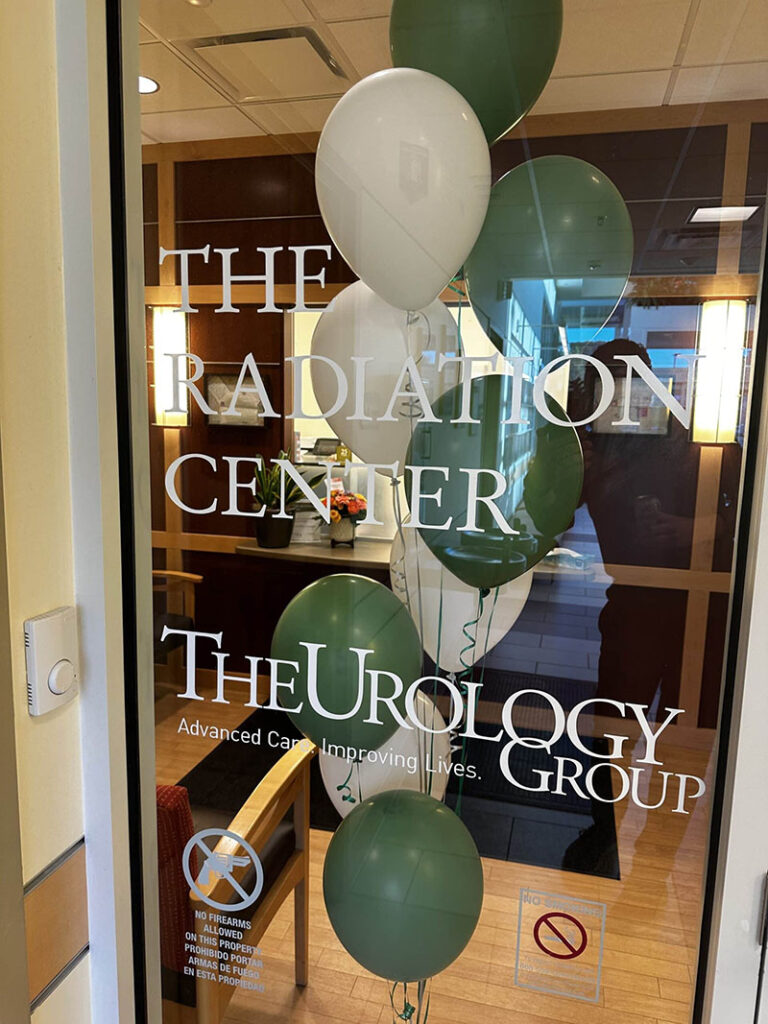
CyberKnife – 10 years of Treating Men with Prostate Cancer
Since our beginning in 1996, The Urology Group has built a strong reputation for being the premier place for men in the Tristate to have prostate cancer treatment. While we as a nation we are still facing the odds of 1 out of 8 men getting this disease, if caught early, prostate cancer is quite curable. That’s why annual visits to your urologist are so important. A quick, painless blood test can go a long way in keeping prostate cancer at bay.
In 2013 we introduced CyberKnife radiation to our prostate cancer toolbox. The treatment is delivered in our Norwood headquarters in a special suite we designed for these patients. During that 10-year span we have treated more than 3,200 men, some traveling thousands of miles for this specialized approach.
This non-invasive treatment typically means men receive a fraction of the treatment sessions (usually about 5) than they would with other radiation (normally about 40). While CyberKnife is not appropriate for everyone with prostate cancer, it has helped thousands of men, and we think that’s a reason to celebrate.
We would like to thank the dedicated team who takes great care of these patients:
- Dr. Peter Fried – Radiation oncologist and Medical Director for Radiation Services
- Dr. Matthew Bertke – Radiation oncologist
- Dr. Jeffrey Grass – Radiation oncologist
- Sanja Bias – Medical physicist
- Rebecca Novak – Radiation therapist
- Heather McGeorge – Radiation therapist
- Kerry Gifford – Radiation Center coordinator
- Kerry Walker – Front desk specialist
- Lori Weber – Front desk specialist
Click to read more about CyberKnife and patients who have benefited from this treatment.